
Introduction
Region Värmland welcomes the European Commission’s initiative to develop a proposal for a new circular economy act. This is an important step toward a more sustainable and resource-efficient future. The perspectives highlighted in the consultation questionnaire are in many respects relevant and well-founded. In this position paper, we wish to complement our answers to the questionnaire with views on areas we believe are missing but are closely linked to the issues addressed in the consultation and are of particular importance to Region Värmland and our stakeholders.
This consultation response from Region Värmland has been prepared by the Department for Regional Development, which holds the overall responsibility for the region’s development. The department leads the work on the regional development strategy and operates within several strategic areas crucial for Värmland’s future. These include business development, education and skills development, research and innovation, gender equality, international relations, infrastructure, as well as bioeconomy, climate, and energy.
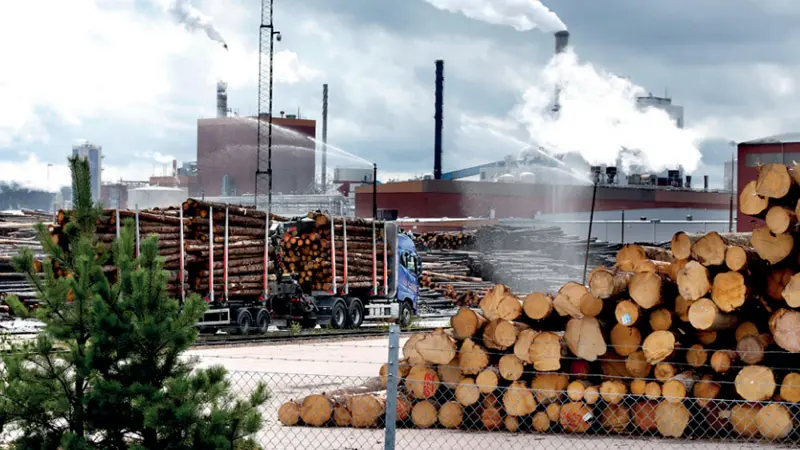
A central aspect in our response is the role of the bioeconomy in strengthening the circular economy. The bioeconomy is highly significant for Värmland. In 2022, Värmland’s total added value for the bioeconomy was 18.2% of GRP, which is the highest share among Swedish regions. The value of forest resources also has great potential to increase and be implemented in new innovations to strengthen the circular economy. Värmland has made major financial and labour investments in the bioeconomy in recent years and therefore holds a strong position for future challenges. We believe that bioeconomy has a key part to play in the development of a sustainable circular economy. The transition to biobased products and a biological cycle is crucial for achieving the EU’s climate goals and strengthening regional innovation capacity. Region Värmland has strong actors within the bioeconomy and sees great opportunities to contribute to this transition.
To achieve an effective circular economy, it is not enough to reuse and recycle materials; we must also actively replace fossil-based products with biobased alternatives. This is particularly important in sectors where materials have high energy content or significant climate impact. A strong circular economy should therefore include incentives to promote the development and use of materials with a lower climate footprint, where biobased solutions play a key role. The use of fossil raw materials must be phased out, and we see a need for EU-level regulation that harmonises frameworks to strengthen the circular economy and reduce dependence on fossil resources. We therefore lack a clearer link between the bioeconomy and the circular economy in the Commission’s consultation.
For this consultation response, we have gathered perspectives from relevant actors within the region of Värmland, including our 16 municipalities and Paper Province, a world-leading cluster in forest-based bioeconomy actively driving development toward increased circularity in Värmland and Europe. We have also collaborated with researchers at the Service Research Center (CTF) at Karlstad University to include a research perspective, which is an important part of the transition to a circular society.
Through dialogue and joint collaboration, these actors have contributed to answering the consultation questions and producing this position paper that reflects Region Värmland’s standpoint. The purpose of this paper is to broaden perspectives in the continued work on the upcoming Circular Economy Act and ensure that it is designed to enable an inclusive, sustainable, and future-oriented circular biobased economy.

Region Värmland’s strategic work on circular economy
Region Värmland’s strategic work on circular economy Region Värmland is actively driving the transition to circular and biobased economy by fostering collaboration, developing new working methods, strengthening knowledge, and taking measures that encourage innovation. The work led by various actors in the region focuses on extending the lifespan of materials and products, from sustainable design to more efficient use and consumption, as well as developing systems for recycling and waste management that contribute to non-toxic and circular material flows. The region actively supports and strengthens companies that want to make efforts in line with the transition and stimulates demand for biobased and circular products and services.
In accordance with Värmland’s Smart Specialisation Strategy 2022–2028, the focus areas are: sustainable production and product design, sustainable consumption patterns, non-toxic and circular cycles, and measures that promote innovation and circular business models. The goal is that waste should not exist but be seen as a valuable raw material in a circular loop.
The regional perspective – a necessity for an effective circular economy act
The conditions for a strong circular economy vary greatly depending on local resources, industrial traditions, areas of expertise, and geographical differences. Therefore, a new circular economy act must have flexibility to adapt to regional needs while aligning with the EU’s overarching goals for sustainability, competitiveness, and resilience. The regional perspective should not be seen merely as an implementation step but as a strategic force to drive innovation, enable scaling, and ensure local anchoring. Regions play a key role in building ecosystems for a circular economy. By supporting collaboration between academia, business, and the public sector, such as through "Regional Innovation Valleys", regions can create conditions for sustainable growth. These collaborations between the public and private sectors are particularly important for realising a strong circular economy and should therefore have a clear place in the new regulation.
Concrete recommendations from Region Värmland
The ten points below present concrete recommendations for the new Circular Economy Act. They reflect a systemic perspective on circularity and highlight strategies, indicators, and policy instruments that can enable real transformation:
- Strengthened holistic perspective and market for secondary materials
The Circular Economy Act should promote a common European market for high-quality secondary raw materials through reuse, repair, and design for long lifecycle. Common recycling systems, certifications, and public procurement are needed to build trust and stimulate demand. Definitions of ‘high-quality recycled and biobased materials’ must include fibre-based materials. Fiber-based materials can be reused in multiple recycling cycles, and we need to value these resources as virgin raw materials. Current standards risk favouring fossil-based alternatives. - Value creation beyond technology
Circular solutions must create technical, functional, relational, and emotional benefits for users. The new circular economy act should encourage service-based models, transparency, and quality criteria. - Coordinated and predictable regulation
Current legislation at EU level addressing circularity (PPWR, ESPR, and CRMA) as well as the upcoming Circular Economy Act must be harmonised. National interpretations create uncertainty, making it difficult for producers and brand owners to make long-term investments in a common EU market. It is therefore crucial that new regulations are unified across the Union. At the same time, we must ensure that the rules do not lead to increased bureaucracy or hinder innovation. - Relevant indicators
In addition to material flows, indicators for product lifespan, reuse, and configuration efficiency (how design, innovation, and organizational strategies interact) should be introduced. Sector-specific indicators (Circularity Performance Indicators) for circularity should also be included in the new act. - Strengthened innovation and regional learning
The new Circular Economy Act should support the development of testbeds and innovation systems that enable technological renewal and collaborations across value chains. Small and medium-sized enterprises need practical support through simplified regulations, accessible financing and regional initiatives to contribute to circular system solutions. - User-centred circularity
The new act must recognize how companies create value through their efforts to combine technical, social, and institutional dimensions to make the circular choice the simplest and most attractive option for everyone. - Public sector as an enabler
The public sector must play an active role in the value chain through binding procurement requirements, reuse platforms, and data sharing on product usage. - Policy instruments and incentives
To promote circularity, economic instruments such as tax shifts, resource extraction to labour, reduced VAT on repairs, and progressive fees for short-lived products should be introduced. Circular consumption must be rewarding, not only economically, but also environmentally and socially. - Systemic policy design
The new act should be designed as a strategic enabler of companies’ configuration capabilities. It needs to allow for different combinations of strategies, ensure that monitoring is based on system-level impact rather than isolated indicators, and support configuration-based governance where multiple pathways to high circularity are recognised. - Ecosystem-based financing
A strong circular economy requires long-term investments and shared risks. The new act should promote financing instruments that supports collaborative actors and steer EU programs toward system innovations.
A regulation that enables real change - Region Värmland’s recommendations to the European Commission
The ten points presented in this position paper constitute concrete recommendations for how the new Circular Economy Act can contribute to real systemic change, with a focus on value preservation, innovation, collaboration, and long-term incentives for both businesses and public actors.
The new act has the potential to become a milestone in the EU’s green transition. To achieve real systemic change, the regulation must not only focus on technical solutions but also on business models, behaviours, and institutional structures. Circularity must become the easiest and most attractive choice for both companies and citizens, not an alternative, but a given.
A successful EU regulation should:
- Recognise multiple strategic paths to high circularity, such as linking bioeconomy and circular economy.
- Support dynamic capabilities and learning in companies and public organisations.
- Connect policy instruments and indicators to value preservation, not just waste management.
- Establish a financial architecture that reflects circular logic - long-term, collaborative, and value-circulating.
The upcoming circular economy act represents an important step toward establishing a common market for secondary raw materials within the EU. By increasing the availability and demand for high-quality recycled materials, the principle of closing resource loops during the waste phase is promoted. This is crucial for reducing dependence on virgin resources and creating new business opportunities in the recycling sector.
At the same time, research from CTF at Karlstad University shows that circularity entails a systemic strategic shift where different company configurations (design, innovation, organisation) must interact to achieve high circularity. In contrast, we see that the questions in the European Commission’s consultation ahead of the new circular economy only to a limited extent consider more advanced circular strategies aimed at extending product lifespans or intensifying use through service- and function-based models. To achieve a fully circular economy, the new act should also include measures that extend and intensify resource loops during the use phase, such as reuse, repair, refurbishment, and sharing.
This consultation response is politically anchored in Region Värmland and reflects our shared ambition to actively contribute to shaping the upcoming act. Through research, partnerships, and practical development, we aim to ensure that our proposals are considered and further developed within the framework of the EU’s future regulations. Region Värmland stands ready to contribute expertise and commitment to make the circular economy a natural part of Europe’s sustainable future. Regions play a key role in turning the EU’s ambitions into practical reality, and we urge the European Commission to leverage the knowledge and experience that exists locally and regionally.
Erik Evestam
Chair, Regional Development Committee
Region Värmland, 6 november 2025